A Buddhist monk offered advice on living an independent life to young adults in their 30s living with their parents on SBS World News' 'Beopryun Road: Monk and Guest'.
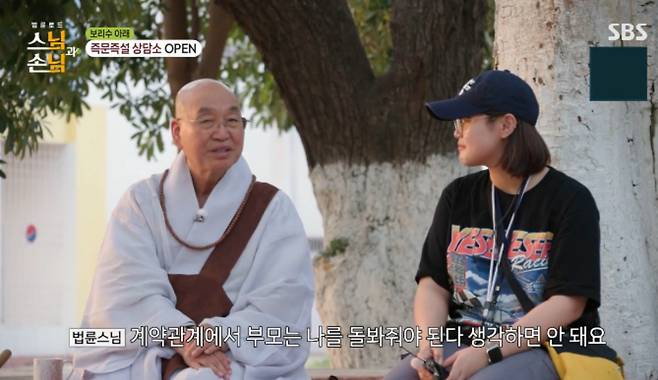
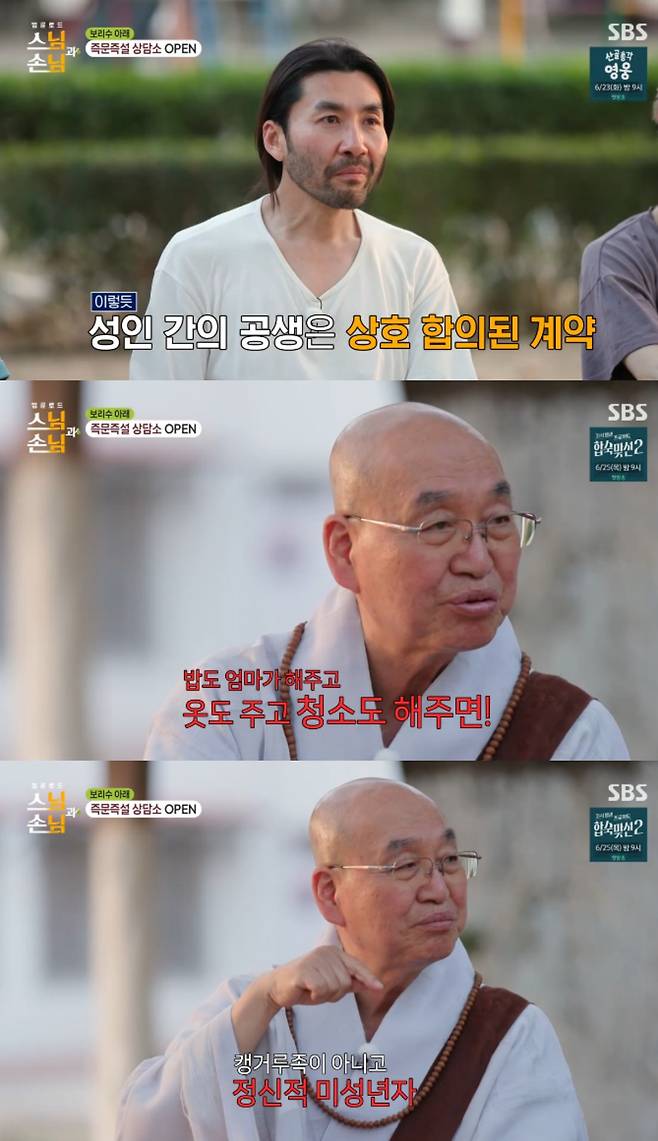
A Buddhist monk appeared on the SBS World News variety show *Dharma Road: Monk and Guest* and offered advice emphasizing the sense of responsibility expected of an adult to a viewer in their 30s living with their parents. During the broadcast, the monk clarified that living with parents after becoming an adult is not merely a protective relationship but a contractual one, explaining that one must fulfill corresponding roles and pay a price for it.
The episode of *Dharma Road: Monk and Guest* aired on the 16th showed Noh Hong-chul, Lee Sang-yoon, Lee Joo-bin, Lee Ki-taek, and Woo Chan concluding their journey in India with the Buddhist monk. During a Q&A session held at Noh Hong-chul's suggestion, a 30-year-old writer shared their situation: wanting to live with their parents for the rest of their lives while simultaneously contemplating marriage.
In response, the Buddhist monk cited biological and social standards for adulthood, pointing out that becoming independent from one's parents after the age of 19 is the natural order of things. He also made it clear that while cohabiting with parents is not inherently problematic, one must fulfill responsibilities commensurate with the relationship between two adults.
Insights on Adulthood from 'Beopryun Road'
In a recent episode of the SBS program 'Beopryun Road: Monk and Guests,' Ven. Pomnyun addressed the challenges faced by 'kangaroo tribe' members living with their parents. He emphasized that once individuals reach adulthood, cohabitation with parents should be viewed as a contractual relationship requiring mutual responsibility and contribution.
About SBS World News
 Seoul Broadcasting System is one of the leading South Korean television and radio broadcasters. The broadcaster legally became known as SBS in March 2000, changing its corporate name from Seoul Broadcasting System.
Wikipedia
Seoul Broadcasting System is one of the leading South Korean television and radio broadcasters. The broadcaster legally became known as SBS in March 2000, changing its corporate name from Seoul Broadcasting System.
Wikipedia