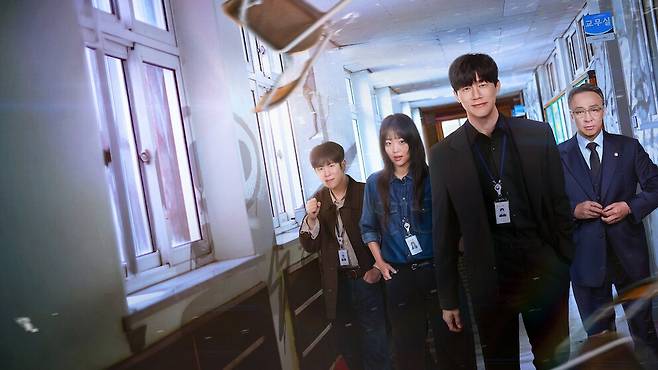
Why I, a teacher of 15 years, felt uncomfortable watching Netflix's 'True Education'

Having worked in schools for 15 years, I have heard a great deal of language from children. In classrooms and hallways, children often use the phrase, Shall I give you a True Education? They use it to give a friend a stern piece of advice, to playfully tease someone, and sometimes even in situations where physical action comes first. To these children, True Education had, at some point, come to be used less to mean teaching correctly and more as an act of scolding or suppressing someone.I feel a strange emotion every time I hear that phrase. This is because, for me, True Education did not begin with such words. I have been hearing this phrase since my high school days in 2001. Later, as I entered a teacher training college and grew into a prospective teacher, True Education was a term directed toward child-centered education, better schools, and more humane classrooms. For someone who had decided to live as a teacher, that word represented a serious value and a direction.True Education did not originally start as a lighthearted buzzword. Throughout the history of educational movements, this term was connected to a critical awareness seeking to change the competitive, exam-oriented education system, the authoritarian school culture, and the educational reality that alienated students lives. The concept of True Education, advocated by teachers organizations including the Korean Teachers and Education Workers Union (KTU), also encompassed students human rights, teachers educational autonomy, and practical actions aimed at creating better schools. Of course, as time passed, its meaning and evaluation diverged significantly, and the reality facing todays teachers unions, the KTU, and various other organizations has changed considerably from the past. Nevertheless, one thing remains clear: True Education was never originally a term used solely to punish someone.However, the True Education used in society and classrooms today is vastly different from its past counterpart. It is used more frequently to humiliate or correct someone than to foster understanding and growth. This very change was the first thing that came to mind while watching the Netflix drama *True Education*.In the actual school setting, infringements on teachers rights and malicious complaints are not abstract concepts. There are moments when a teachers judgment is easily doubted during classes and student guidance, and avoiding problems rather than resolving them is seen as the safer choice. Teachers often hesitate in their roles of guiding students. I find myself wondering if I should say this, if I should give this guidance, if it might escalate into a complaint from parents, and if the administrators and the institution will be able to protect me. Thus, the catharsis shown in the drama is underpinned by the deficiencies of reality. The frustration that has been repeated in the school setting serves as the basis for that emotion.However, a sense of discomfort lingered throughout the viewing. While the work speaks of restoring teachers authority, it sometimes makes that authority appear to stand in opposition to students human rights. Parents harsh words and actions are explained as a desperation to protect their children, but teachers responses are easily interpreted as authoritarianism or a risk of violence. This asymmetry weighed on my mind throughout the viewing.Of course, a teachers authority must always go hand in hand with responsibility. Teachers authority is neither the right to suppress students nor does it mean that a teacher can do as they please. Teachers authority is the minimum condition that guarantees teachers can perform educational activities without undue infringement. Only when teachers can teach safely can students learn stably. Students human rights and teachers authority are not terms that push each other away, but rather fundamental conditions that must be upheld together within the school.Therefore, the true education depicted in dramas is intriguing but dangerous. While satisfying scenes captivate viewers, school issues become simplistic when the language of education turns into the language of punishment. Real-world schools cannot be restored simply by scolding one person. Schools require systems, relationships, trust, and accountability all working together.At the end of Episode 5, there is a scene featuring the Minister of Education delivering a public address. Representing the Ministry, he bows his head in apology to teachers who took their own lives due to infringements on their teaching rights, as well as to those currently suffering. He then states, I am sorry that you were left unprotected and forced to endure alone due to the absence of an education system.Although this scene is dramatic, it was difficult to overlook. My first thought was, Will such a world really come to pass? Surely not. At the same time, I also wondered why those words sounded so unfamiliar. What teachers desire is a basic system that protects their legitimate educational activities. They need schools that do not make teachers bear sole responsibility for their educational judgments, and procedures that do not brand teachers as perpetrators before the facts are verified.In this respect, this scene reveals the core essence of True Education. The drama sometimes races toward the idea that a single, stronger supervisor can resolve a school crisis. However, what is more urgently needed in real-world schools is a system where teachers do not have to endure hardships alone. A structure must be established where schools and institutions respond together to malicious complaints, along with standards that protect the rights of both teachers and students.Ultimately, the meaning of True Education can be re-examined here. In a classroom where the True Education of individual parents, teachers, and students clashes, what is needed may not be harsher punishment. It is a method of sharing the responsibility of education without erasing each others rights.Teachers teaching safely and students learning stably lie in the same direction. When a teachers educational activities are protected, classes are less disrupted, and when students rights are respected, education gains greater persuasiveness. Schools can recover not by suppressing one side, but by establishing standards that must be upheld together.Netflixs True Education draws viewers in with satisfying scenes. However, the significance of this work lies beyond the initial sense of catharsis. The true education we need today is not about punishing others, but about creating conditions for shared growth. I hope that this drama serves as an opportunity for every member of society to reflect upon their own true education in a somewhat non-violent manner.

Having worked in schools for 15 years, I have heard a great deal of language from children. In classrooms and hallways, children often use the phrase, "Shall I give you a 'True Education'?" They use it to give a friend a stern piece of advice, to playfully tease someone, and sometimes even in situations where physical action comes first. To these children, "True Education" had, at some point, come to be used less to mean teaching correctly and more as an act of scolding or suppressing someone.

I feel a strange emotion every time I hear that phrase. This is because, for me, "True Education" did not begin with such words. I have been hearing this phrase since my high school days in 2001. Later, as I entered a teacher training college and grew into a prospective teacher, "True Education" was a term directed toward child-centered education, better schools, and more humane classrooms. For someone who had decided to live as a teacher, that word represented a serious value and a direction.

"True Education" did not originally start as a lighthearted buzzword. Throughout the history of educational movements, this term was connected to a critical awareness seeking to change the competitive, exam-oriented education system, the authoritarian school culture, and the educational reality that alienated students' lives. The concept of "True Education," advocated by teachers' organizations including the Korean Teachers and Education Workers Union (KTU), also encompassed students' human rights, teachers' educational autonomy, and practical actions aimed at creating better schools. Of course, as time passed, its meaning and evaluation diverged significantly, and the reality facing today's teachers' unions, the KTU, and various other organizations has changed considerably from the past. Nevertheless, one thing remains clear: "True Education" was never originally a term used solely to punish someone.

However, the "True Education" used in society and classrooms today is vastly different from its past counterpart. It is used more frequently to humiliate or correct someone than to foster understanding and growth. This very change was the first thing that came to mind while watching the Netflix drama *True Education*.

In the actual school setting, infringements on teachers' rights and malicious complaints are not abstract concepts. There are moments when a teacher's judgment is easily doubted during classes and student guidance, and avoiding problems rather than resolving them is seen as the safer choice. Teachers often hesitate in their roles of guiding students. I find myself wondering if I should say this, if I should give this guidance, if it might escalate into a complaint from parents, and if the administrators and the institution will be able to protect me. Thus, the catharsis shown in the drama is underpinned by the deficiencies of reality. The frustration that has been repeated in the school setting serves as the basis for that emotion.

However, a sense of discomfort lingered throughout the viewing. While the work speaks of restoring teachers' authority, it sometimes makes that authority appear to stand in opposition to students' human rights. Parents' harsh words and actions are explained as a desperation to protect their children, but teachers' responses are easily interpreted as authoritarianism or a risk of violence. This asymmetry weighed on my mind throughout the viewing.

Of course, a teacher's authority must always go hand in hand with responsibility. Teachers' authority is neither the right to suppress students nor does it mean that a teacher can do as they please. Teachers' authority is the minimum condition that guarantees teachers can perform educational activities without undue infringement. Only when teachers can teach safely can students learn stably. Students' human rights and teachers' authority are not terms that push each other away, but rather fundamental conditions that must be upheld together within the school.

Therefore, the "true education" depicted in dramas is intriguing but dangerous. While satisfying scenes captivate viewers, school issues become simplistic when the language of education turns into the language of punishment. Real-world schools cannot be restored simply by scolding one person. Schools require systems, relationships, trust, and accountability all working together.

At the end of Episode 5, there is a scene featuring the Minister of Education delivering a public address. Representing the Ministry, he bows his head in apology to teachers who took their own lives due to infringements on their teaching rights, as well as to those currently suffering. He then states, "I am sorry that you were left unprotected and forced to endure alone due to the absence of an education system."

Although this scene is dramatic, it was difficult to overlook. My first thought was, "Will such a world really come to pass? Surely not." At the same time, I also wondered why those words sounded so unfamiliar. What teachers desire is a basic system that protects their legitimate educational activities. They need schools that do not make teachers bear sole responsibility for their educational judgments, and procedures that do not brand teachers as perpetrators before the facts are verified.

In this respect, this scene reveals the core essence of "True Education." The drama sometimes races toward the idea that a single, stronger supervisor can resolve a school crisis. However, what is more urgently needed in real-world schools is a system where teachers do not have to endure hardships alone. A structure must be established where schools and institutions respond together to malicious complaints, along with standards that protect the rights of both teachers and students.

Ultimately, the meaning of True Education can be re-examined here. In a classroom where the "True Education" of individual parents, teachers, and students clashes, what is needed may not be harsher punishment. It is a method of sharing the responsibility of education without erasing each other's rights.

Teachers teaching safely and students learning stably lie in the same direction. When a teacher's educational activities are protected, classes are less disrupted, and when students' rights are respected, education gains greater persuasiveness. Schools can recover not by suppressing one side, but by establishing standards that must be upheld together.

Netflix's "True Education" draws viewers in with satisfying scenes. However, the significance of this work lies beyond the initial sense of catharsis. The true education we need today is not about punishing others, but about creating conditions for shared growth. I hope that this drama serves as an opportunity for every member of society to reflect upon their own "true education" in a somewhat non-violent manner.